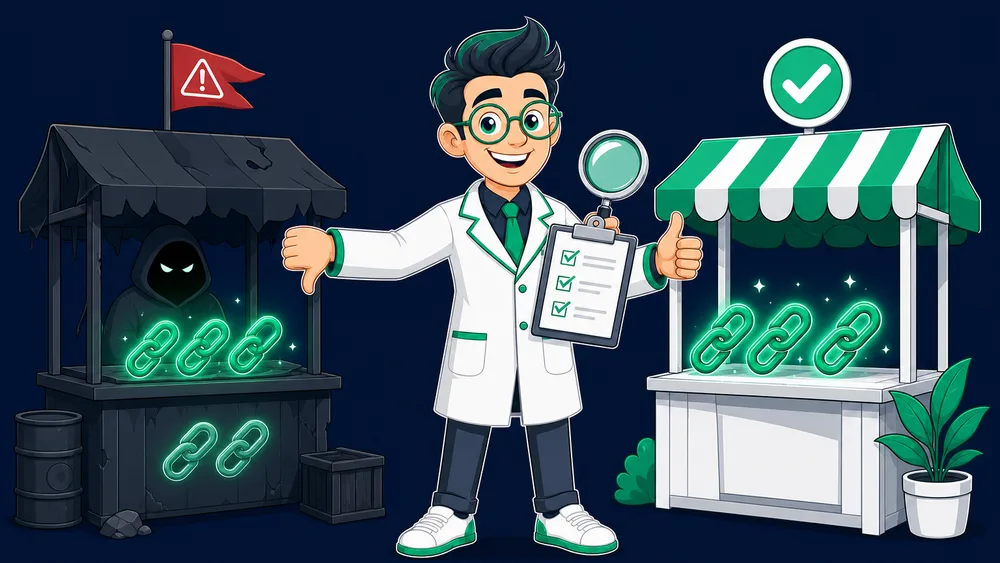
To choose a link-building agency safely, check three things: whether they let you approve every target site before outreach, whether you pay only when a link goes live, and whether they can show you real, clickable placements from the last 90 days. Agencies that guarantee link counts, hide their targets, or default to exact-match anchor text are selling manipulation that Google’s SpamBrain AI devalues. You can run this check in about 20 minutes.
Every agency uses the same words: “high-quality,” “white-hat,” “real sites.” The pitch tells you nothing. What they will show you, what they guarantee, and how they answer a few questions tell you everything.
Why does the wrong agency cost more than its fee?
A bad agency can sink your rankings, not just waste the retainer. The reason is that Google’s enforcement changed and most buyers did not notice.
What happens when you hire a bad link-building agency?
The most common outcome is wasted spend, not a dramatic penalty. Google’s automated link spam systems, driven by its SpamBrain AI, now mostly ignore manipulative links rather than punishing them. You pay for 20 links, they do nothing, and no warning appears in Google Search Console. That is worse than a penalty in one way: a penalty tells you to stop, while silent devaluation just drains the budget while you wonder why rankings did not move. New to the basics? Start with what is white-hat link building.
What are the red flags of a bad link-building agency?
If you spot three or more of these nine red flags, walk away. Each one signals links built for rankings rather than readers.
1. They guarantee link counts at a flat rate, with no say over the sites. Real editorial placement can’t be fully guaranteed, because real publishers decide what they publish. “20 links a month, guaranteed” means they own the sites, which is a network, not outreach.
2. They won’t show you the target sites before placement. No preview, no approval, no quality control. If you can’t see where your link is going until after you pay, you’re buying blind. Transparency is the single fastest tell.
3. Exact-match anchor text by default. An agency that wants to point “best crm software” at your money page is using a 2015 tactic that now paints a target on your site. Natural profiles are mostly branded and contextual.
4. “Our private network of sites.” Phrases like “our network” or “our portfolio of blogs” describe a PBN, the textbook link scheme Google is built to ignore or penalize.
5. You pay whether or not the link goes live. If the agency gets paid the same when a link fails, they have zero skin in the game. Aligned pricing is the opposite: you pay when a link is live and verified, not before.
6. Suspiciously cheap and suspiciously fast. Real outreach takes human time. A $20 link in 48 hours is automated spam. A 2023 Authority Hacker survey of 750+ link builders put the average paid link at $83, and genuine editorial links run $150 to $500+ each.
7. A wall of proof that’s too good. Invented testimonials, stock “team” photos, and logos of clients they never had are red flags. The FTC’s fake-review rule, effective October 21, 2024, makes fabricated endorsements illegal with penalties up to $51,744 per violation.
8. They sell you on DR, and only DR. Domain Rating is a third-party estimate, not a Google metric, and it is easy to inflate. An agency fixated on “DR 60+” while ignoring relevance and real readers is optimizing the wrong number.
9. They can’t explain how they actually get links. Ask them to walk through their outreach. You want a real process of research, relevance, and relationships. “We have connections” usually means mass-automated spam.
What questions should you ask a link-building agency?
Ask these five questions live, on the call, before you sign anything. The answers reveal whether their incentives match yours.
- “Can I approve every target site before you do outreach?” The answer should be yes.
- “When exactly am I billed, and what happens if a link never goes live?” Listen for pay-on-live, not pay-upfront.
- “What does the anchor-text mix look like across a campaign?” It should be mostly branded and contextual.
- “Are any of these placements on sites you own or operate?” The answer should be no.
- “Show me 3 to 5 real, live placements from the last 90 days.” Real links you can click, not screenshots.
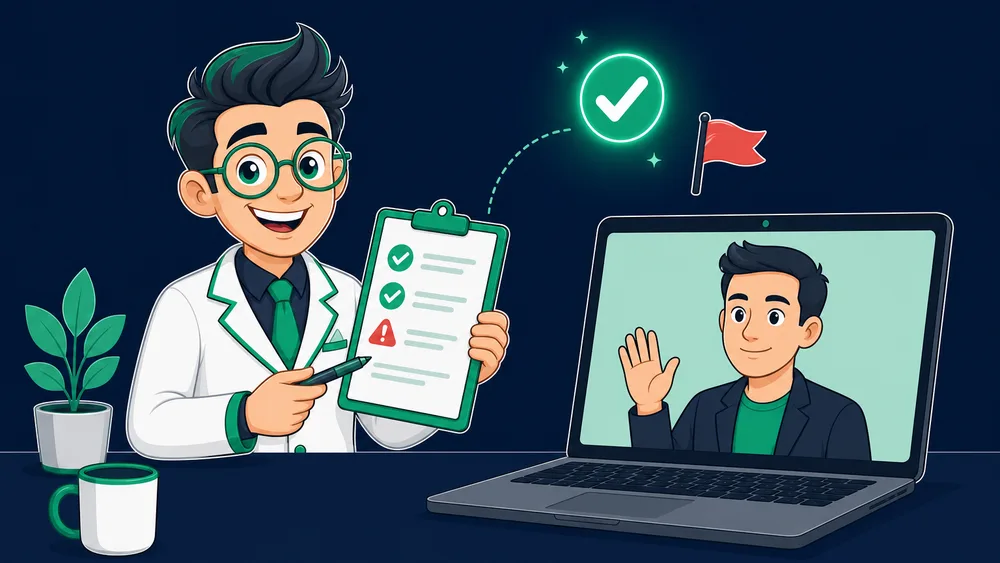
What does a good link-building agency look like?
A good agency is almost boring: you approve the targets, they do real editorial outreach, and you pay only for links that go live and get verified. Anchors stay natural, sites are relevant and have real readers, and there is no fabricated proof, just placements you can click. The speed comes from tooling, while the judgment about what is worth pursuing stays human. That combination is simply the nine red flags inverted.
What should you pay a link-building agency?
Fair pricing for a real editorial link is $150 to $500+ per live link, tiered by the publication’s authority and audience. The Authority Hacker survey’s $83 average is dragged down by cheap, low-value placements, so treat sub-$100 offers as the automated spam to avoid. Paying on a pay-per-live-link basis, rather than a retainer, ties every dollar to a verified result.
Common mistakes when choosing an agency
The biggest mistake is trusting the pitch instead of the process. “White-hat” on a sales page means nothing; only target approval, pay-on-live terms, and real placements do. A second mistake is chasing Domain Rating as the single quality metric, when relevance and real audience matter more. A third is assuming a cheaper agency saves money, when links Google devalues cost you the fee plus the rankings they fail to move.
Quoteable takeaways
Quoteable takeaway: The fastest way to vet a link-building agency is to ask whether you can approve targets before outreach and pay only when a link goes live; a “no” to either signals manipulation.
Quoteable takeaway: Since Google’s SpamBrain AI now devalues manipulative links silently, the main risk of a bad agency is wasted budget with no warning, not a dramatic manual penalty.
Quoteable takeaway: A 2023 Authority Hacker survey of 750+ link builders put the average paid link at $83, but genuine editorial links cost $150 to $500+, so unusually cheap offers signal automated spam.
Frequently asked questions
How do I choose a good link-building agency?
Choose a link-building agency by checking whether you can approve every target site before outreach, whether you pay only when a link goes live, and whether they show real, clickable placements from the last 90 days. Avoid agencies that guarantee link counts, hide targets, or default to exact-match anchor text, which signal manipulation Google devalues.
What are the biggest red flags in a link-building agency?
The biggest red flags are guaranteed link counts with no say over the sites, refusing to show target sites before placement, exact-match anchor text by default, and 'our private network of sites,' which describes a PBN. Fabricated testimonials are another red flag and are now illegal under the FTC's 2024 fake-review rule.
How much should a link-building agency cost?
Budget $150 to $500+ per live editorial link, tiered by the publication's authority. A 2023 Authority Hacker survey of over 750 link builders put the average paid link at $83, but that average includes cheap, low-value links. Anything under about $100 is usually automated spam that Google's systems ignore.
Are pay-per-live-link agencies better than retainers?
For buyers who specifically want links that go live, pay-per-live-link is usually the safer deal because you are billed only for verified results. A retainer can still fit a broader scope that includes strategy, content, and digital PR, but it pays for activity whether or not a link lands.
The safe way to hire a link-building agency
Vet a link-building agency by the process, not the pitch: approve targets, pay on live, and demand real placements. That is the version worth hiring, and it is the one we built. Want to see where editorial links would actually move your rankings before you commit to any agency? Start with a free audit. If a link isn’t live, you don’t pay for it.