
White-hat link building is the practice of earning backlinks a real editor would keep on their site because the content genuinely helps their reader. A white-hat link is editorially placed on a relevant site with a real audience, not bought as a followed link to pass ranking signals, which Google’s link spam policy treats as manipulation. The test that separates it from the rest is simple: would this link still exist if search engines did not?
Most link-building pitches sound identical, so the pitch tells you nothing. What matters is whether the link is earned or engineered.
What is white-hat link building?
White-hat link building earns links through genuinely useful content and outreach, so publishers link on the merits. It is the opposite of buying followed links or building sites to link to yourself.
What makes a backlink “white-hat”?
A backlink is white-hat when a publisher chooses to link because the content is useful to their audience. It sits inside editorial content on a relevant site with real readers, uses natural branded or contextual anchor text, and would survive if the publisher were asked to defend it. It is not hidden in a footer, placed on a private blog network, or stuffed with exact-match anchors. The value you pay for is the research and outreach work, not the link itself.
How is white-hat different from black-hat link building?
The difference is intent: white-hat links serve readers, while black-hat links exist only to manipulate rankings. Black-hat tactics like PBNs, link farms, and paid followed links are classified as link schemes in Google’s spam policies and risk devaluation or a manual action. We break the full spectrum down in white-hat vs black-hat link building. White-hat is slower but durable; black-hat is fast but borrowed time.
Why does white-hat link building matter in 2026?
It matters because Google now quietly neutralizes the alternative. Manipulative links increasingly do nothing, so only editorial links reliably build authority.
What happens to non-white-hat links now?
Google’s link spam systems, enforced by its SpamBrain AI since the December 2022 link spam update, discount manipulative links silently rather than penalizing you loudly. You pay for links that simply do nothing, and no warning appears in Google Search Console. The Penguin algorithm, part of Google’s core system in real time since September 2016, made this enforcement continuous. Durable authority now comes only from links that survive because they earned their place.
What does a white-hat backlink look like?
A white-hat backlink shares five traits, and manipulative links fail on most of them. Here is the contrast.
| Trait | White-hat link | Manipulative link |
|---|---|---|
| Site relevance | Relevant to your topic | Any site that sells links |
| Audience | Real readers | Crawlers only |
| Placement | Editorial, in useful content | Footer, sidebar, or paid slot |
| Anchor text | Mostly branded / contextual | Exact-match keywords |
| Would exist without Google | Yes | No |
Miss two or more of these traits and the link is not building durable authority; it is building risk.
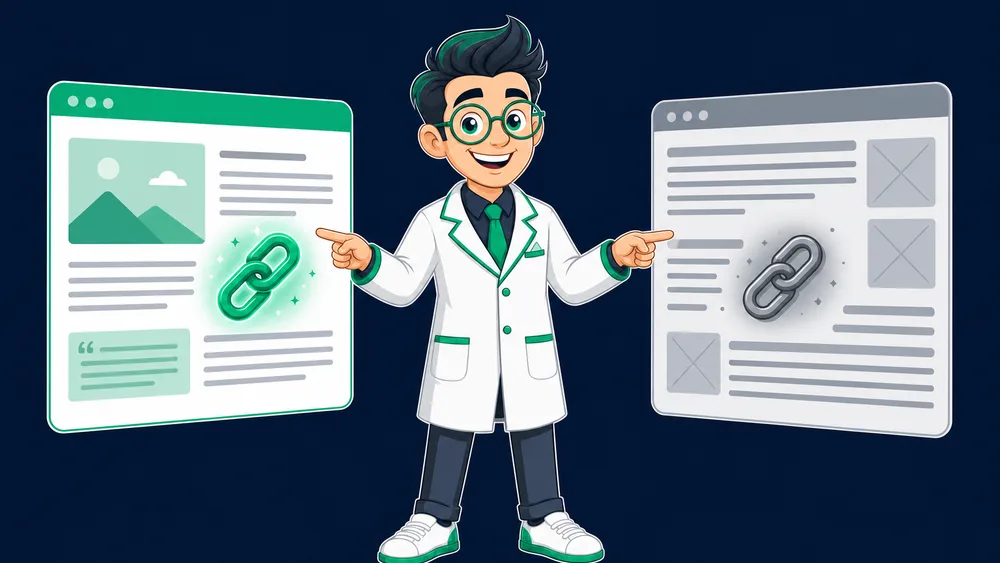
How do you tell if a vendor is really white-hat?
Judge a vendor by what they show and guarantee, not by the words “white-hat” on their site. Four red flags reliably expose the difference.
What are the red flags of a non-white-hat vendor?
The clearest red flags are guaranteed link counts at a flat rate, exact-match anchor text as the default, no visibility into the publisher until after you pay, and payment upfront regardless of whether a link goes live. Guaranteed placement is a tell, because real editorial placement depends on publishers who decide what they publish. A vendor pitching “our network of sites” is describing a PBN. For the full checklist, see how to vet a link-building agency.
How are white-hat links actually built?
White-hat links are built by creating genuinely useful content and pitching it to relevant publishers, so a real editor chooses to link. The work is research, prospecting, content, and outreach, not paying for a followed link.
What is the pay-per-live-link model?
At Cited Labs we run white-hat outreach on a pay-per-live-link basis: you approve the target sites, we do the editorial outreach and placement, and you only pay when a link is live and verified on the page. Agentic AI handles the speed of research and prospecting, while human SEO judgment decides what is worth pursuing. If a link isn’t live, you don’t pay for it, which keeps every dollar tied to a real editorial result.
Common misconceptions about white-hat link building
The biggest misconception is that “white-hat” is a label a vendor can simply claim. It is defined by the link, not the sales page: relevance, real audience, editorial placement, and natural anchors. A second misconception is that white-hat means “free” or “unpaid.” Paying a team to earn editorial placements is white-hat; paying a publisher for a followed link to pass ranking signals is not. The difference is whether the link is earned or bought.
Quoteable takeaways
Quoteable takeaway: White-hat link building is defined by a single test, whether a link would exist without search engines, not by the word “white-hat” on a vendor’s website.
Quoteable takeaway: Since Google’s SpamBrain AI discounts manipulative links silently, white-hat editorial links are now the only reliable way to build durable ranking authority.
Quoteable takeaway: A white-hat backlink is relevant, sits in editorial content on a site with real readers, and uses natural anchor text; missing two of those traits turns authority into risk.
Frequently asked questions
What is white-hat link building?
White-hat link building is earning backlinks that a real editor would keep because the content helps their reader. The links are editorially placed on relevant sites with real audiences and natural anchor text, rather than bought as followed links to pass ranking signals, which Google's link spam policy treats as manipulation.
Is white-hat link building the same as free link building?
No. White-hat link building can be paid, as long as you are paying for research, content, and outreach rather than for a followed link. Paying a team to earn an editorial placement is white-hat; paying a publisher for a followed link purely to manipulate rankings is not, and Google requires paid links to use rel="sponsored" or rel="nofollow".
Why does white-hat link building matter?
It matters because Google's SpamBrain AI now devalues manipulative links silently, so they stop counting toward rankings with no warning. Only editorial links on relevant sites with real readers reliably build durable authority, which makes white-hat the practical choice, not just the safe one.
How can I tell if a link is white-hat?
Check five traits: site relevance, a real audience, editorial placement, natural branded or contextual anchor text, and whether the link would exist without search engines. A link on an irrelevant or link-only site with exact-match anchors is manipulative, regardless of what a vendor calls it.
The bottom line on white-hat link building
White-hat link building is not a label; it is a standard: links a real editor keeps because they help a real reader. Those links compound authority and survive Google’s updates, while manipulative links quietly stop counting. Want to see where white-hat links would actually move your rankings? Start with a free audit. If a link isn’t live, you don’t pay for it.